

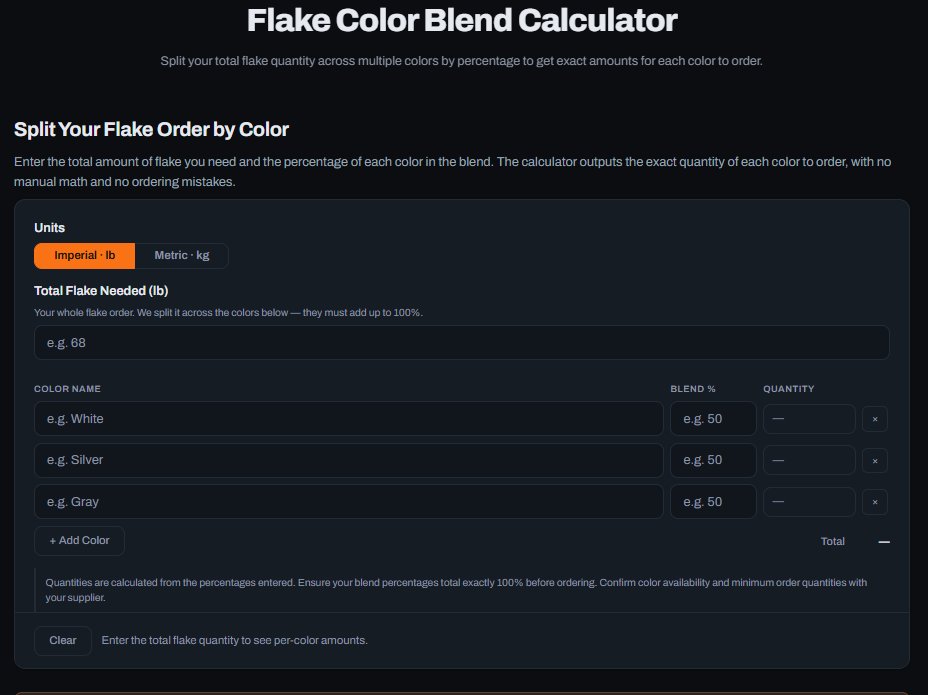
Choosing decorative colors for an epoxy floor can be an enjoyable part of a flooring project, but planning the final combination takes some thought. Decorative flakes come in many colors, sizes, and blends, and the selected combination can influence the overall appearance of the finished surface. Instead of relying only on guesswork, property owners and contractors can use planning tools to compare different possibilities before ordering materials. Understanding how these tools work can make color selection more organized and help create a floor that suits the intended space.
Start With a Flake Color Blend Calculator
A flake color blend calculator can help users explore different combinations before applying decorative flakes to an epoxy floor. Instead of choosing colors individually without seeing how they may work together, a calculator can provide a more structured way to plan the blend.
Start by considering the existing colors in the room. Walls, cabinets, equipment, doors, countertops, and lighting can all influence how the floor appears.
A blend that looks suitable in isolation may appear different once other colors surround it. Planning the combination can therefore make the final selection easier.
Consider the Room’s Appearance
The purpose of the space should influence the decorative choice. A residential garage may benefit from a combination that complements vehicles and storage cabinets, while a commercial workspace may need a more neutral appearance.
Think about whether you want the floor to become a visual feature or blend naturally with the surroundings.
Neutral combinations can create a simple and organized appearance, while contrasting colors can make the floor more noticeable. The right choice depends on the character and function of the space.
Compare Flake Colors Carefully
Decorative flakes are commonly available in different shades and combinations. Some blends may include subtle differences between colors, while others create stronger contrast.
When comparing options, consider how the colors will appear under the lighting in the actual room. Natural daylight and artificial lighting can change how particular shades look.
Using samples can make this comparison easier. Physical samples can also help you judge whether the selected blend complements nearby surfaces before purchasing larger quantities.
Think About Flake Size
Color is not the only factor that influences the appearance of a flake floor. Flake size can also change the overall visual effect.
Smaller flakes may create a more uniform appearance, while larger flakes can produce a more noticeable decorative pattern. Different applications may benefit from different sizes depending on the desired result.
Ask the flooring professional or supplier about available sizes and how they may affect the finished appearance. Combining size and color thoughtfully can create a more balanced design.
Use Epoxy Flooring Calculators
Epoxy flooring calculators can help with another important part of project planning: estimating the amount of material required for a particular floor.
Before using a calculator, measure the area accurately. For rectangular spaces, multiply the length by the width. Irregular areas can be divided into smaller sections and calculated separately.
Product coverage, coating thickness, and the type of epoxy system should also be considered. Manufacturer specifications can provide the information needed for a more useful estimate.
Account for Surface Preparation
Decorative planning is only one part of an epoxy flooring project. The existing concrete also needs to be evaluated before materials are ordered.
Cracks, stains, old coatings, grease, dust, and moisture can affect the preparation process. Depending on the condition of the surface, grinding, cleaning, repairs, or other preparation may be necessary.
These requirements can influence both material quantities and project planning. A professional assessment can help identify preparation work that a simple calculator may not include.
Plan the Overall Design
A good floor design should work with the rest of the property. Consider walls, doors, cabinets, machinery, lighting, and furniture when selecting a flake combination.
It can also help to think about future changes. If the space may receive new cabinets or equipment later, a versatile color blend may be easier to coordinate.
The goal is to choose a design that remains practical while providing the appearance you want.
Confirm Material Requirements
Once the color combination and flooring system have been selected, confirm the quantities required for the complete project.
Depending on the system, materials may include primer, base coat, decorative flakes, topcoat, and other supporting products. Each component should be compatible with the selected system.
Ask the supplier or installer to verify the quantities before purchasing. This can help prevent shortages during installation.
Conclusion
Planning an epoxy floor involves both design and practical considerations. A suitable flake combination can improve the appearance of the space, while accurate material calculations can make preparation more organized. Using planning tools alongside product specifications and professional guidance can help you make decisions with greater confidence. If you are preparing an epoxy flooring project, tradeepoxy.com can be explored for useful calculators and resources that may assist with planning colors and material requirements.