

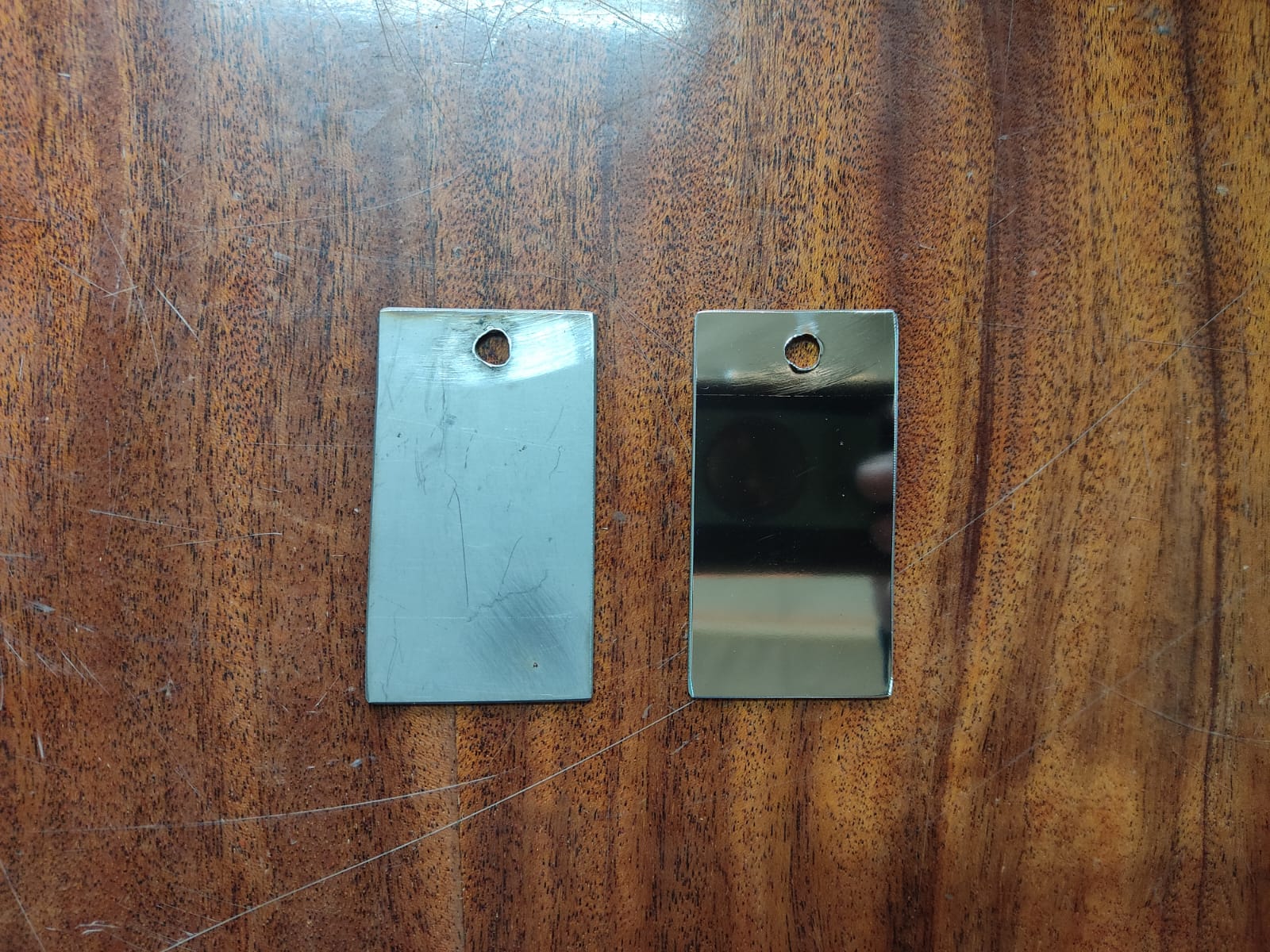
Today, manufacturers of stainless steel products operate under growing demands for surface quality, product appearance, and production speed. This is especially relevant for companies producing heated towel rails, railings, decorative structures, and other tubular products, where even minor processing defects can affect the perception of the finished product.
Against this backdrop, more and more manufacturers are adopting electrolytic plasma polishing (EPP) technology — a modern metal finishing method that automates the polishing process and ensures consistently high surface quality. The implementation of this technology relies on EPP MACHINE series equipment developed by EPP Dynamics Pvt Ltd. Learn more about the technology and equipment here: https://plasmapolish.com/epp
Why Traditional Polishing of Tubular Products Is Becoming Inefficient
Conventional mechanical polishing methods require significant labor input and highly skilled personnel. Processing products with welded joints, bends, and hard-to-reach areas remains particularly challenging.
When manufacturing tubular products, companies regularly face the following tasks:
-
processing welded seams;
• removing heat tint discoloration after welding;
• polishing bends and internal areas;
• eliminating micro-scratches left after mechanical processing;
• ensuring uniform surface quality across the entire production batch.
Manual processing of such products often leads to inconsistent results, increased production time, and higher manufacturing costs.
Heated Towel Rails: Uniform Shine and Reduced Manual Processing
For manufacturers of heated towel rails, surface quality directly affects the product’s appeal to end consumers. Achieving a uniform shine on pipe bends, joints, and welded connections is especially important.
Using EPP technology with EPP MACHINE equipment makes it possible to:
-
achieve a uniform surface across the entire geometry of the product;
• effectively process complex sections and pipe joints;
• remove traces of thermal impact after welding;
• minimize manual finishing work;
• improve quality consistency in mass production.
As a result, manufacturers obtain higher-quality products while reducing processing time.
Railings and Guardrails: Processing Complex Geometries Without Defects
The production of stainless steel railings and guardrails involves numerous welded joints and decorative elements. Traditional polishing of such structures is labor-intensive, especially when working with hard-to-access areas.
Electrolytic plasma polishing technology allows manufacturers to:
-
efficiently process welded seams;
• remove heat tint discoloration;
• smooth transitions after welding;
• achieve a uniform surface without mechanical damage.
Since the process involves no direct mechanical contact, the risk of creating new surface defects is significantly reduced.
Tubular Products: Increased Productivity and Lower Costs
For manufacturers producing tubular structures, interior components, and decorative products, one of the key advantages of EPP is its high processing speed.
Compared to traditional manual polishing, the technology enables companies to:
-
significantly reduce finishing time;
• lower consumable material costs;
• decrease overall processing costs;
• automate the production process.
EPP MACHINE equipment utilizing EPP technology is particularly effective in mass production environments where consistent quality and high productivity are essential.
Removal of Heat Tint and Weld Seam Processing
After welding, traces of thermal impact often remain on stainless steel surfaces, negatively affecting both appearance and surface quality.
EPP technology effectively enables manufacturers to:
-
remove heat tint discoloration;
• clean surfaces after welding;
• smooth micro-irregularities;
• improve the appearance of welded joints.
At the same time, the process does not require aggressive acids or large amounts of chemical reagents, making it safer and more environmentally friendly.
Future Prospects of the Technology for Industry
Amid a shortage of skilled labor and increasing product quality requirements, manufacturers are increasingly shifting toward automated metal finishing technologies.
Electrolytic plasma polishing technology and EPP MACHINE equipment enable manufacturers of tubular products to improve product quality, reduce production costs, and accelerate manufacturing output without compromising finishing quality.
Learn more about EPP technology and EPP MACHINE equipment from EPP Dynamics Pvt Ltd: https://plasmapolish.com/epp
Electrolytic Plasma Polishing in the Production of Tubular Products: How Modern Technologies Improve the Quality of Heated Towel Rails, Railings, and Metal Structures
Today, manufacturers of stainless steel products operate under growing demands for surface quality, product appearance, and production speed. This is especially relevant for companies producing heated towel rails, railings, decorative structures, and other tubular products, where even minor processing defects can affect the perception of the finished product.
Against this backdrop, more and more manufacturers are adopting electrolytic plasma polishing (EPP) technology — a modern metal finishing method that automates the polishing process and ensures consistently high surface quality. The implementation of this technology relies on EPP MACHINE series equipment developed by EPP Dynamics Pvt Ltd. Learn more about the technology and equipment here: https://plasmapolish.com/epp
Why Traditional Polishing of Tubular Products Is Becoming Inefficient
Conventional mechanical polishing methods require significant labor input and highly skilled personnel. Processing products with welded joints, bends, and hard-to-reach areas remains particularly challenging.
When manufacturing tubular products, companies regularly face the following tasks:
-
processing welded seams;
• removing heat tint discoloration after welding;
• polishing bends and internal areas;
• eliminating micro-scratches left after mechanical processing;
• ensuring uniform surface quality across the entire production batch.
Manual processing of such products often leads to inconsistent results, increased production time, and higher manufacturing costs.
Heated Towel Rails: Uniform Shine and Reduced Manual Processing
For manufacturers of heated towel rails, surface quality directly affects the product’s appeal to end consumers. Achieving a uniform shine on pipe bends, joints, and welded connections is especially important.
Using EPP technology with EPP MACHINE equipment makes it possible to:
-
achieve a uniform surface across the entire geometry of the product;
• effectively process complex sections and pipe joints;
• remove traces of thermal impact after welding;
• minimize manual finishing work;
• improve quality consistency in mass production.
As a result, manufacturers obtain higher-quality products while reducing processing time.
Railings and Guardrails: Processing Complex Geometries Without Defects
The production of stainless steel railings and guardrails involves numerous welded joints and decorative elements. Traditional polishing of such structures is labor-intensive, especially when working with hard-to-access areas.
Electrolytic plasma polishing technology allows manufacturers to:
-
efficiently process welded seams;
• remove heat tint discoloration;
• smooth transitions after welding;
• achieve a uniform surface without mechanical damage.
Since the process involves no direct mechanical contact, the risk of creating new surface defects is significantly reduced.
Tubular Products: Increased Productivity and Lower Costs
For manufacturers producing tubular structures, interior components, and decorative products, one of the key advantages of EPP is its high processing speed.
Compared to traditional manual polishing, the technology enables companies to:
-
significantly reduce finishing time;
• lower consumable material costs;
• decrease overall processing costs;
• automate the production process.
EPP MACHINE equipment utilizing EPP technology is particularly effective in mass production environments where consistent quality and high productivity are essential.
Removal of Heat Tint and Weld Seam Processing
After welding, traces of thermal impact often remain on stainless steel surfaces, negatively affecting both appearance and surface quality.
EPP technology effectively enables manufacturers to:
-
remove heat tint discoloration;
• clean surfaces after welding;
• smooth micro-irregularities;
• improve the appearance of welded joints.
At the same time, the process does not require aggressive acids or large amounts of chemical reagents, making it safer and more environmentally friendly.
Future Prospects of the Technology for Industry
Amid a shortage of skilled labor and increasing product quality requirements, manufacturers are increasingly shifting toward automated metal finishing technologies.
Electrolytic plasma polishing technology and EPP MACHINE equipment enable manufacturers of tubular products to improve product quality, reduce production costs, and accelerate manufacturing output without compromising finishing quality.
Learn more about EPP technology and EPP MACHINE equipment from EPP Dynamics Pvt Ltd: https://plasmapolish.com/epp